
October 4, 2026
Hiding Your TV Cables for Good: 5 Clean Finish Options for Brick, Drywall, and Shiplap Walls
Discover five professional ways to hide TV cables on brick, drywall, and shiplap walls for a safer installation and a clean, modern finish.

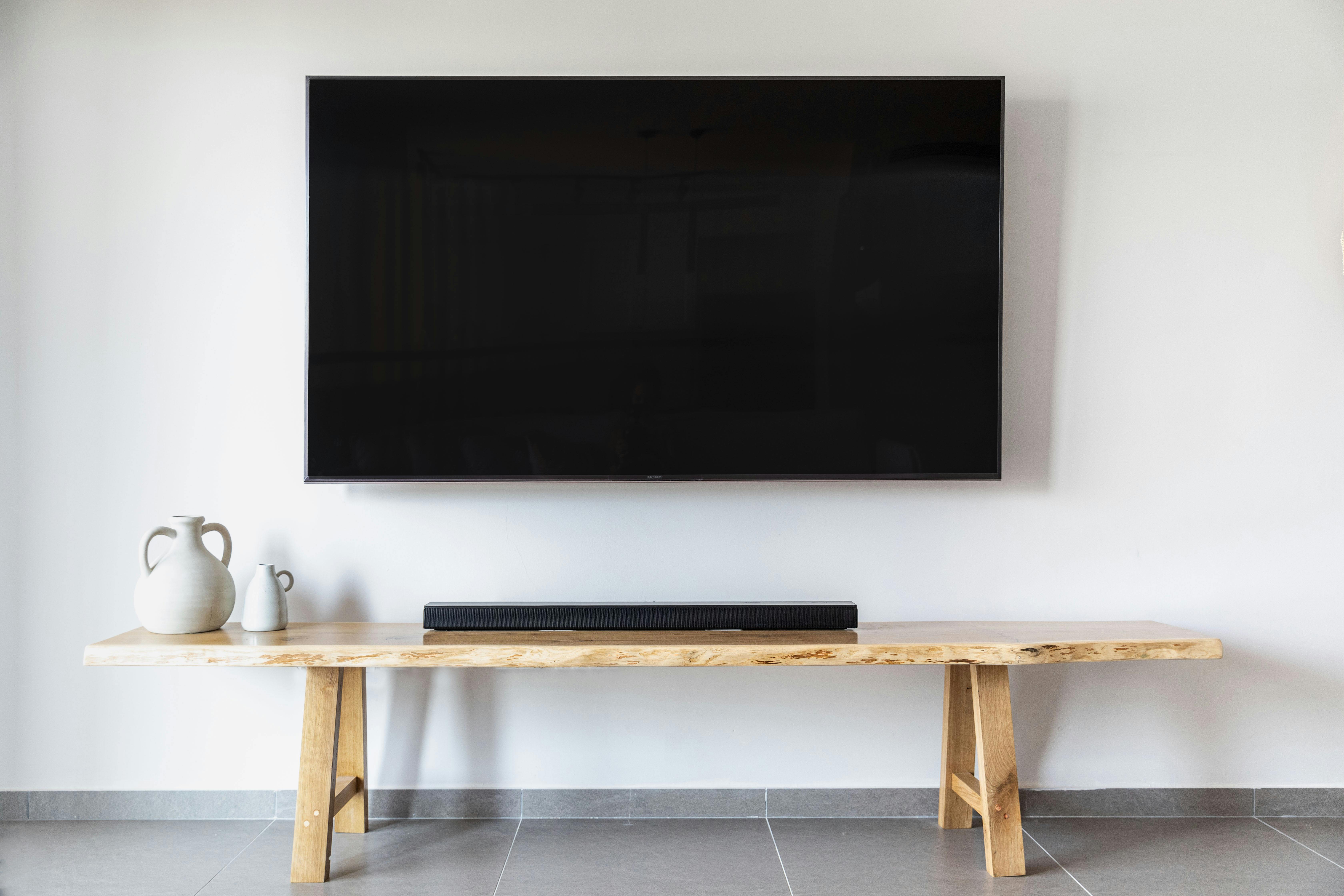
Would you like your wall-mounted TV to look like a built-in feature instead of a screen surrounded by loose cables?
A professional TV installation involves more than choosing the right mount. Cable routing, power access, wall construction, component placement, and finishing details all affect the final appearance and safety of your entertainment system.
The best solution for drywall may not be appropriate for brick. Shiplap and other decorative wall treatments require additional planning to protect the finish while providing secure support. At Setup Home Theater, we provide TV wall mounting, cable concealment, soundbar installation, and complete home theater installation throughout Rocky Mount, Raleigh, Wilson, Greenville, Tarboro, Roanoke Rapids, Nashville, Smithfield, Goldsboro, Zebulon, Wendell, Louisburg, Oxford, and Henderson.
Here are five professional ways to hide TV cables and create a safer, cleaner entertainment space.
Why Professional TV Cable Concealment Matters
Visible power cords, HDMI cables, Ethernet cables, coaxial wires, and speaker cables can make an otherwise attractive room look unfinished. Loose cables may also create trip hazards, place strain on connectors, and make future equipment upgrades more difficult.
A professional installer evaluates:
- Wall construction and mounting surface
- Stud locations and structural support
- Existing outlets and electrical access
- Cable length, bend radius, and signal requirements
- Separation between low-voltage and line-voltage wiring
- Access for future service
- TV height, viewing angle, and soundbar alignment
- Ventilation for receivers, game consoles, and streaming equipment
Standard TV power cords should not simply be placed inside a wall cavity. A safe installation may require a listed in-wall power solution or a properly installed electrical outlet behind the TV. Low-voltage cables such as HDMI, Ethernet, coaxial, optical, and speaker wire should be rated for in-wall use when routed behind drywall.
The result is more than a tidy appearance. Proper cable concealment provides a clean, seamless finish, protects your equipment, and makes the system easier to maintain.
1. In-Wall Cable Routing for Drywall
Drywall over wood framing is often the most flexible surface for cable concealment. When the correct stud bay is available, low-voltage cables can be routed between the TV and a lower connection point near a media cabinet or existing outlet.
A professional drywall installation typically includes:
- Confirming the TV location and viewing height.
- Locating studs and checking for wiring, plumbing, and other obstructions.
- Cutting precise openings for low-voltage plates.
- Installing an approved recessed power solution when needed.
- Fishing in-wall-rated HDMI, Ethernet, coaxial, optical, or speaker cables.
- Keeping low-voltage wiring separated from line-voltage wiring.
- Securing, labeling, and testing all cables before closing the installation.
This approach creates the popular floating TV appearance because the cables disappear behind the wall. It works well in living rooms, bedrooms, media rooms, and dedicated theater spaces.
For homeowners searching for TV wall mounting Raleigh NC, in-wall routing can deliver the polished finish expected in a modern entertainment area. It is also a popular option for TV mounting Wilson NC when the goal is to remove visible cords without adding surface channels.
The cable type matters. A standard extension cord or factory TV power cord is not designed for concealed installation. Professional technicians identify the correct cable ratings and coordinate electrical work when required.
2. Paintable Surface Raceway for Brick Walls
Brick walls do not provide the same open cavity as drywall. Cutting a large channel into brick can create dust, damage the masonry, and produce an unnecessarily invasive installation. In many cases, a paintable surface raceway is the safest and most practical solution.
A surface raceway is a low-profile channel that covers cables along the wall. It can run vertically from the TV to an outlet or horizontally toward a media cabinet. Once installed and painted to match the wall, it becomes far less noticeable.
Benefits include:
- Minimal disruption to the masonry
- Easier access for future cable changes
- Protection from abrasion and impact
- A cleaner finish than exposed wiring
- Flexibility for HDMI, Ethernet, coaxial, and speaker cables
- Better alignment with trim, corners, or mortar joints
For a brick fireplace wall or exposed brick feature wall, the raceway can be positioned along an architectural line to reduce its visual impact. A professional installer can also plan the route around the mount, soundbar, and equipment location.
This method is especially useful for homeowners researching TV mounting Roanoke Rapids NC who want a secure installation on brick without committing to extensive masonry work.
Power wiring still requires proper planning. A raceway should not be used as a shortcut for placing an unsuitable power cord inside or against the wall. Your installer can recommend a listed solution or coordinate with a qualified electrician.
3. A Protected Masonry Chase or Conduit
Some brick installations require a more integrated appearance. When the wall construction and design allow it, a protected masonry chase or conduit may provide a more permanent cable pathway.
This option is more involved than a surface raceway. Before any cutting or drilling, the installation team should confirm:
- Whether the wall is structural
- Whether electrical wiring or plumbing is nearby
- Whether the wall separates conditioned and unconditioned areas
- Whether fire-rated construction must be maintained
- Which conduit, bushings, and protective materials are appropriate
- How the finished surface will be repaired
A protected chase can produce an excellent built-in appearance, but it is not a casual DIY project. Masonry work requires the right tools, measurements, dust control, and structural awareness. Electrical work may also require a licensed electrician.
A professional evaluation helps you determine whether the visual benefit justifies the construction work. In some rooms, a carefully installed paintable raceway provides nearly the same finished appearance with significantly less disruption.
4. Behind-the-Wall Routing for Shiplap
Shiplap and wood accent walls add character to a room, but cable concealment requires careful planning. Shiplap may be installed over drywall, furring strips, or wood framing. The available space behind the boards will determine whether cables can be routed behind the surface.
A professional shiplap installation may involve:
- Locating the framing behind the boards
- Determining whether boards can be removed without damage
- Routing approved low-voltage cables through the correct pathway
- Installing flush cable plates where practical
- Protecting wires from fasteners and sharp edges
- Using an approved power solution for the TV
- Reinstalling and finishing the shiplap carefully
If removing boards is not practical, a narrow surface raceway may be painted to match the wall. In some cases, it can be positioned along a vertical seam, corner, or trim transition where it blends into the design.
The mounting surface also matters. Shiplap alone may not provide enough structural support for a large TV and mounting bracket. The mount should be attached to appropriate framing or another approved support structure.
Professional planning protects both the equipment and the wall finish while creating a more refined result.
5. Consolidate Components in a Media Cabinet
Cable concealment does not require every device to sit directly below the television. Moving streaming devices, game consoles, receivers, amplifiers, and control equipment into a media cabinet can significantly reduce visible clutter.
A centralized equipment location can also improve ventilation and service access. Depending on the room, cables may be routed through the wall, inside a raceway, behind trim, or through an existing cabinet pathway.
A professional installer can help plan:
- HDMI connections between the TV and components
- Ventilation around receivers and amplifiers
- Power and network access
- Remote control or smart home integration
- Cable labeling for future troubleshooting
- Adequate slack for equipment replacement
- Soundbar and speaker placement
This approach is especially useful for a larger home theater installation Rocky Mount NC project. A centralized equipment location can support surround sound, streaming, gaming, lighting control, and other connected features without filling the TV wall with electronics.
For a complete theater project, Setup Home Theater home cinema installation includes projector and screen setup, acoustic planning, theater seating layout, and smart control integration.

DIY Cable Hiding vs. Professional Installation
DIY cable concealment may look simple after the TV is already mounted. However, cutting into a wall without confirming what is behind it can damage electrical wiring, plumbing, structural components, or finished surfaces.
Common DIY problems include:
- Running a non-rated power cord inside the wall
- Drilling into electrical wiring or plumbing
- Mounting into drywall without sufficient structural support
- Combining low-voltage and line-voltage wiring improperly
- Kinking or damaging HDMI cables
- Leaving no access for future service
- Cracking brick or damaging shiplap boards
- Installing the TV too high or out of alignment
- Blocking ventilation around electronic components
Professional installation reduces these risks through site assessment, proper hardware selection, cable testing, accurate mounting, and careful finishing. Setup Home Theater works with more than 80 industry-leading brands, including Samsung, LG, Sony, Sonos, Lutron, Denon, and Sanus.
Our TV installation and wall mounting service includes wall mounting on different surface types, soundbar and shelf mounting, full cable concealment, and tabletop or cabinet setups.
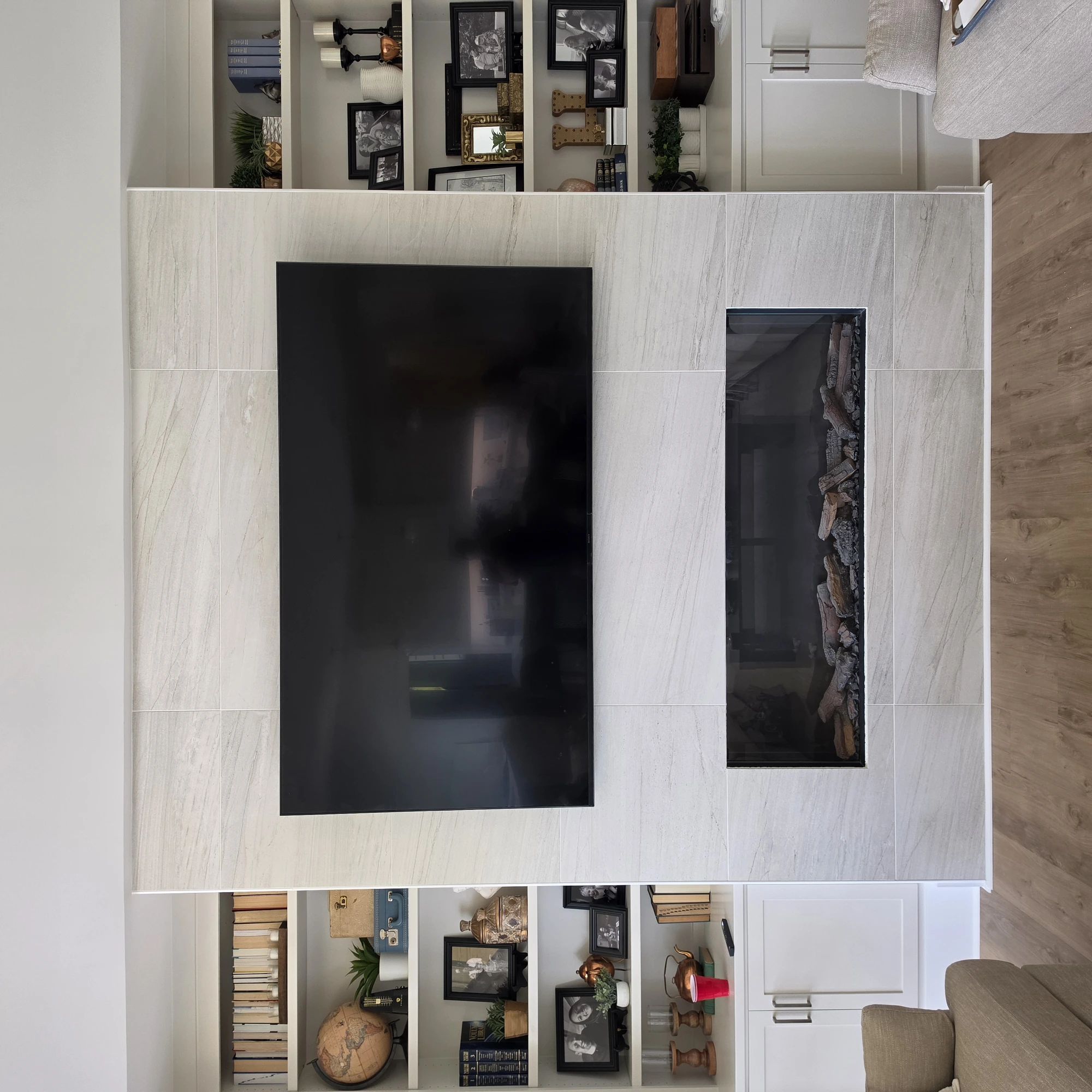
Which Cable Concealment Option Is Best for You?
The right method depends on your wall type, existing power location, number of connected devices, and desired finish.
- Drywall: In-wall routing usually provides the cleanest floating TV appearance.
- Brick: A paintable surface raceway is often the best low-disruption option.
- Brick requiring a built-in finish: A protected chase or conduit may be appropriate.
- Shiplap: Behind-the-wall routing works when the framing and finish can be accessed safely.
- Multiple components: A media cabinet or equipment rack can reduce visible cable clutter.
Whether you need TV wall mounting Raleigh NC, TV mounting Wilson NC, TV mounting Roanoke Rapids NC, or complete home theater installation Rocky Mount NC, professional cable management can give your room a safer and more finished appearance.
Create a Clean, Seamless TV Installation
Your television should be the focal point of the room, not the cables surrounding it. Setup Home Theater provides precise TV mounting, cable concealment, soundbar installation, audio integration, and smart home setup throughout eastern North Carolina.
Contact Setup Home Theater to discuss your wall type, equipment, and installation goals. Call 252-270-1280 for a professional evaluation and a clean, modern finish completed correctly the first time.
Ready to upgrade your setup?
Our local team designs, installs and calibrates it all. Get a free quote today.
Call 252-270-1280